Surge protections devices help manage transient overvoltages by providing a controlled path for surge energy away from sensitive electrical equipment. Understanding an https://lsp.global/surge-protection-device-wiring-diagram/ makes it easier to recognize how live, neutral, and protective earth conductors interact within a protection system.
A clear connection layout supports accurate installation planning and helps maintain an efficient protection path. SPDs are commonly connected in parallel with the electrical circuit, allowing normal current to continue through the installation while the protection device responds when a transient occurs.
Parallel Connection Method
Parallel wiring is widely used for AC surge protection. In a typical single-phase arrangement, the SPD connects between the relevant supply conductors and the protective earth system.
Important connection points include:
- Live conductor connected according to the selected SPD configuration
- Neutral conductor connected where the system requires neutral protection
- Protective earth connected directly to the appropriate earth bar
- Dedicated overcurrent protection provided where required
- Conductors arranged neatly to create a direct discharge path
This configuration allows the SPD to remain separate from the normal load current while providing surge diversion when necessary.
V-Connection For Shorter Wiring
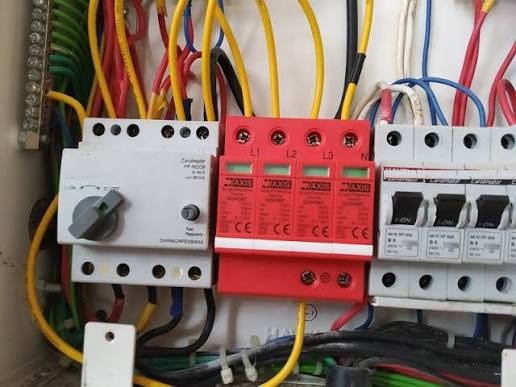
A V-shaped connection can provide a particularly direct wiring arrangement. Incoming and outgoing conductors are connected close to the SPD terminals, helping reduce conductor length, additional impedance, and unwanted voltage rise during fast transient events.
Keeping connections short is an important part of effective SPD installation. Guidance commonly recommends keeping the combined connection length to the network and earth connection within approximately 50 centimeters.
Branch Connection Arrangement
Another method uses a branch from the main circuit to the SPD. This arrangement can be practical where the panel design or equipment layout makes direct V-connection difficult.
For a well-organized installation:
- Keep the branch connection as short as practical
- Position the SPD close to the protected distribution point
- Keep phase, neutral, and earth conductors grouped appropriately
- Avoid unnecessary bends and loops
- Separate incoming surge-current paths from protected outgoing conductors
These practices help maintain a clean electrical layout and support consistent surge-current performance.
Choosing A Suitable Connection Approach
The correct wiring method depends on the electrical system, SPD configuration, installation location, and applicable standards. Single-phase, three-phase, and photovoltaic systems can require different conductor arrangements and protection modes.
A carefully prepared wiring diagram provides a useful visual reference before installation begins. Electricians should always verify system characteristics, SPD ratings, protective-device requirements, grounding arrangements, and local electrical regulations before completing the work.
Building A Reliable Protection Layout
Effective SPD connections combine correct conductor identification, suitable protection, proper grounding, and short wiring paths. When these elements are planned together, surge protection can become an organized and dependable part of an electrical installation.